- English
- French
- German
- Portuguese
- Spanish
- Russian
- Japanese
- Korean
- Arabic
- Irish
- Greek
- Turkish
- Italian
- Danish
- Romanian
- Indonesian
- Czech
- Afrikaans
- Swedish
- Polish
- Basque
- Catalan
- Esperanto
- Hindi
- Lao
- Albanian
- Amharic
- Armenian
- Azerbaijani
- Belarusian
- Bengali
- Bosnian
- Bulgarian
- Cebuano
- Chichewa
- Corsican
- Croatian
- Dutch
- Estonian
- Filipino
- Finnish
- Frisian
- Galician
- Georgian
- Gujarati
- Haitian
- Hausa
- Hawaiian
- Hebrew
- Hmong
- Hungarian
- Icelandic
- Igbo
- Javanese
- Kannada
- Kazakh
- Khmer
- Kurdish
- Kyrgyz
- Latin
- Latvian
- Lithuanian
- Luxembou..
- Macedonian
- Malagasy
- Malay
- Malayalam
- Maltese
- Maori
- Marathi
- Mongolian
- Burmese
- Nepali
- Norwegian
- Pashto
- Persian
- Punjabi
- Serbian
- Sesotho
- Sinhala
- Slovak
- Slovenian
- Somali
- Samoan
- Scots Gaelic
- Shona
- Sindhi
- Sundanese
- Swahili
- Tajik
- Tamil
- Telugu
- Thai
- Ukrainian
- Urdu
- Uzbek
- Vietnamese
- Welsh
- Xhosa
- Yiddish
- Yoruba
- Zulu
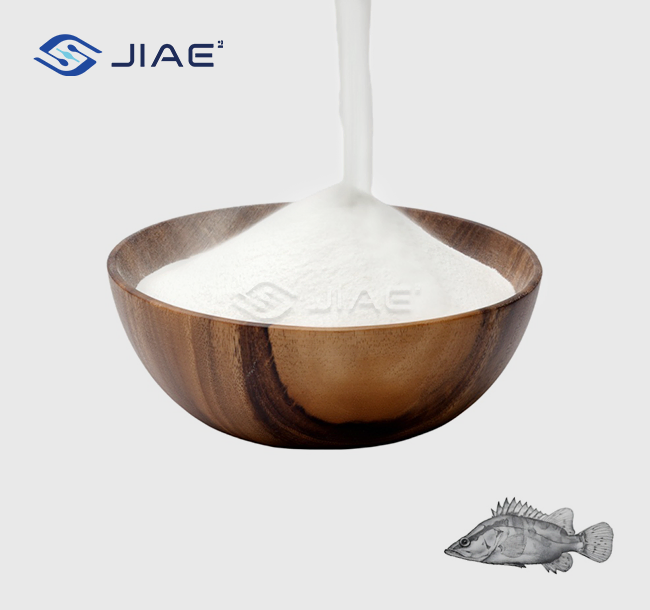
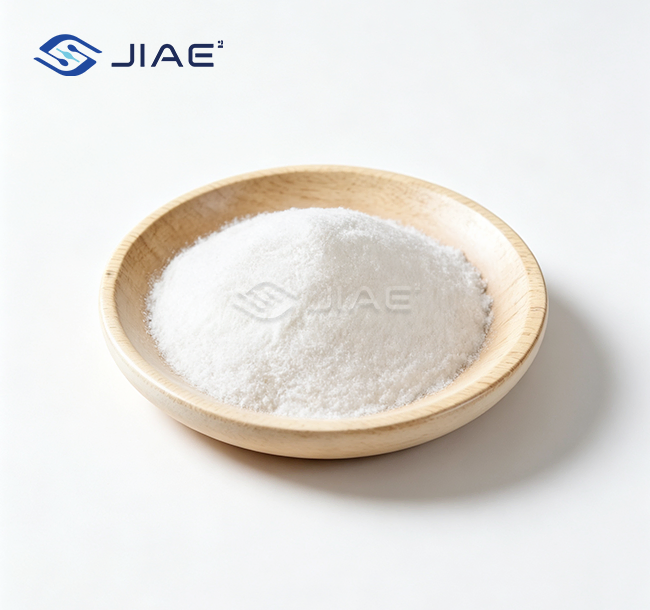
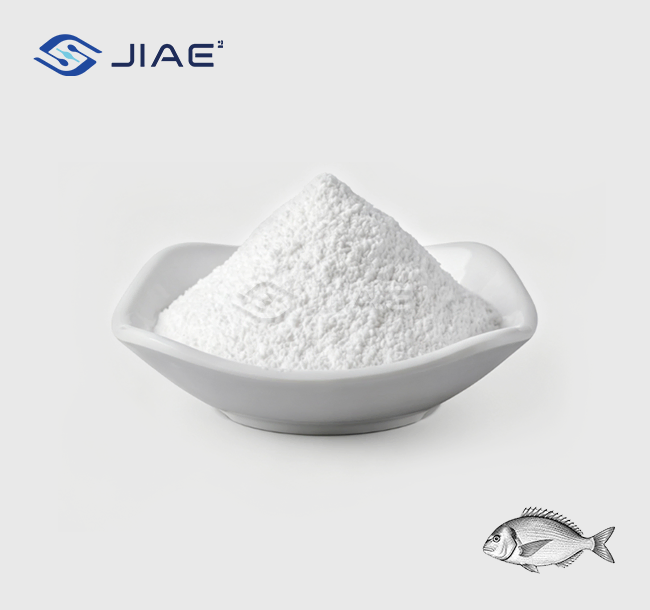
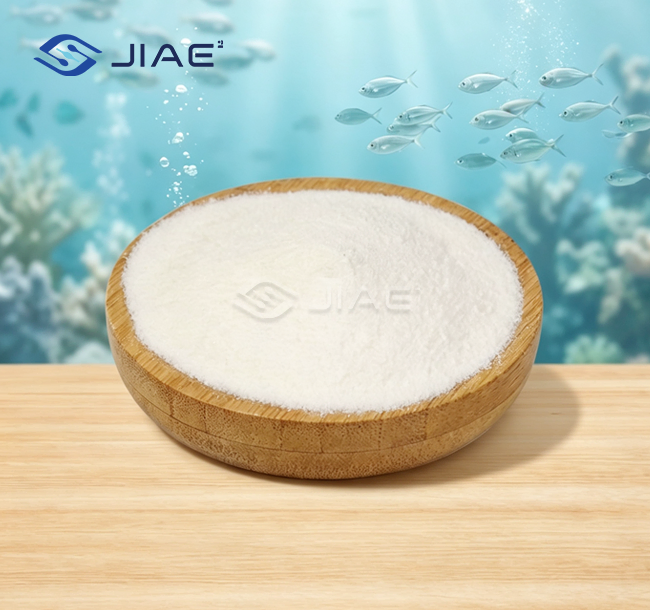
Hydrolyzed Marine Collagen Type 1
Key Active: Bioactive Collagen
Purity: Min 95%
Origin Country: China
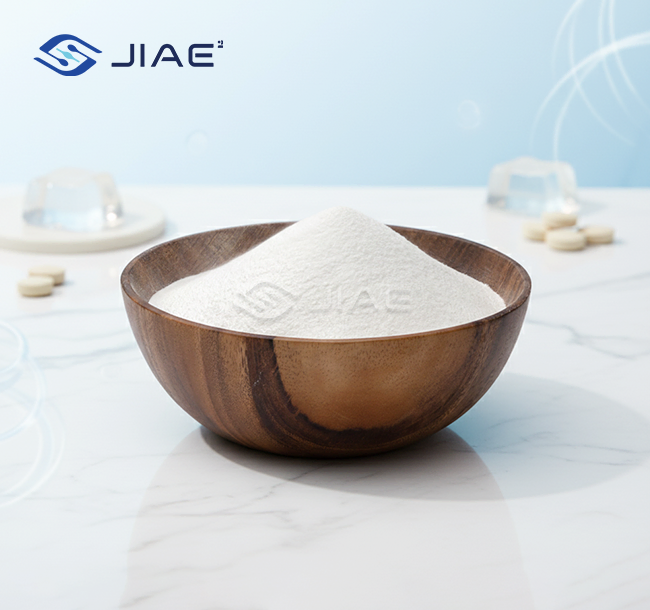
Color: Pale yellow to white powder
Solubility: Rapid dissolve
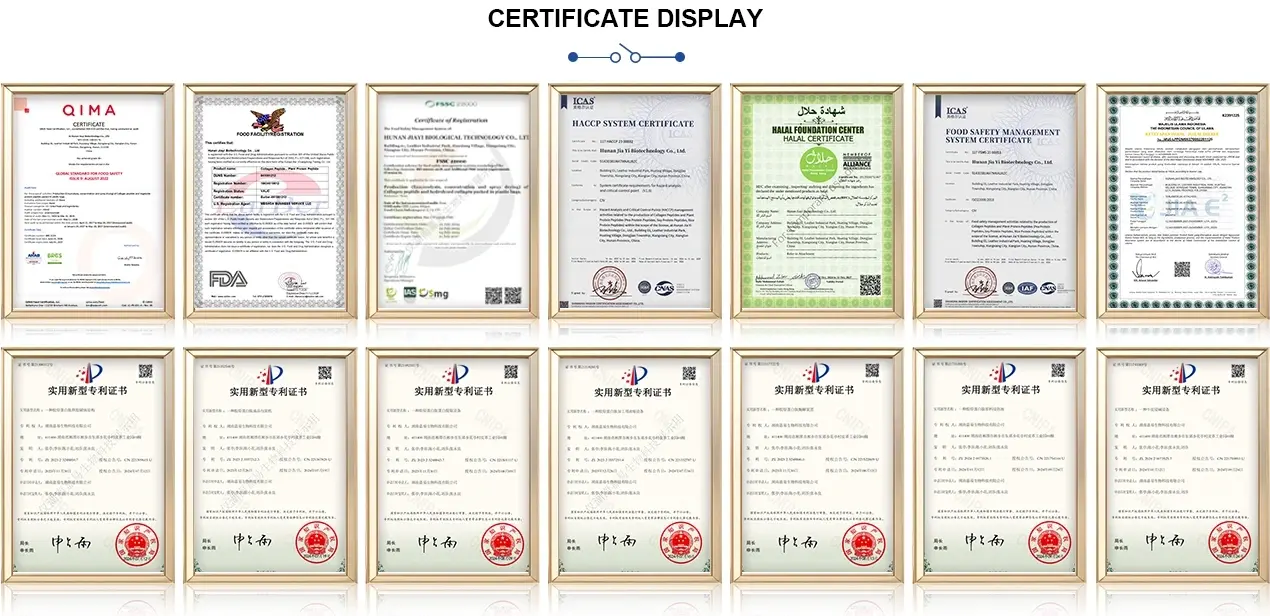
Quality Standards: FDA、 ISO9001、 ISO22000、 HACCP、 BRC、 FSSC22000、HALAL
Terms: EXW, FOB, CFR, CIF, DAP, DDP
Pay Terms: T/T Wire Transfer Preferred
Transport Options: Air, Sea, Rail
Customization: OEM, ODM
Supply Status: Ample Stock; Safe and Fast Delivery
Packaging: 10 kg & 20 kg
MOQ Requirement: 1kg
Shelf: 24 mo
CasNo.: 9064-67-9
Premium Hydrolyzed Marine Collagen Type 1 Powder - Professional-Grade Bioactive Peptides for Health Supplement Manufacturing
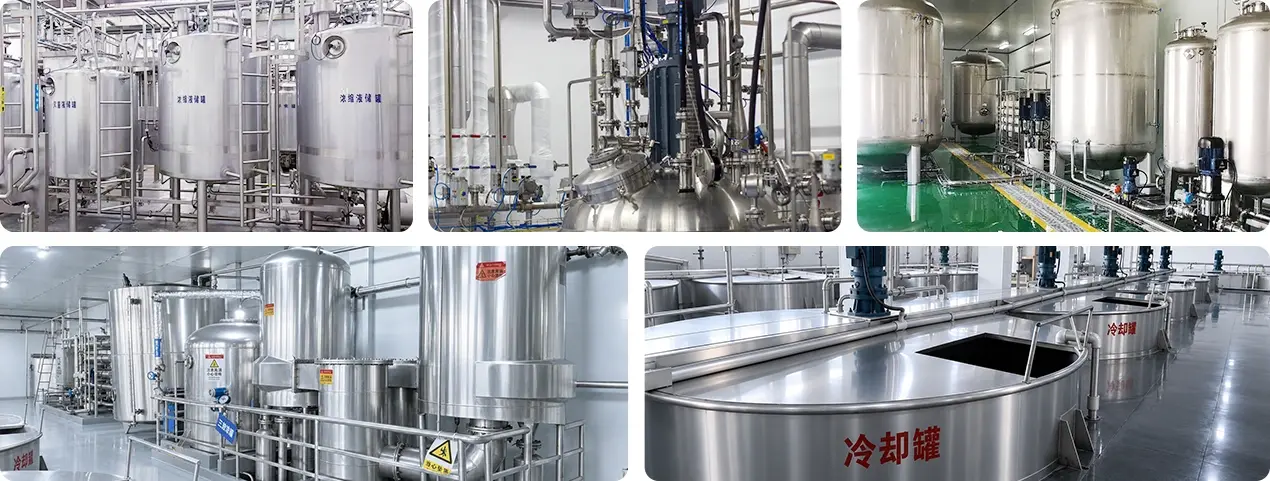
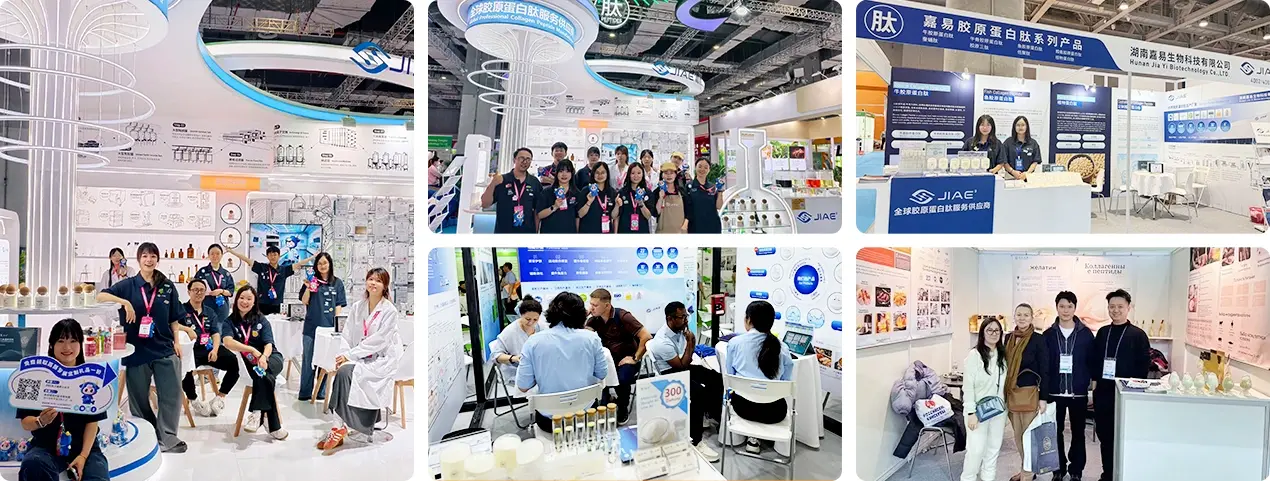
An enzymatic extraction line turns wild-caught saltwater fish into food-grade Hydrolyzed Marine Collagen Type 1 at Jia Yi Bio. Twenty-three years of peptide work stand behind this maker. Each year 4,000 tons of fish collagen ship out. Molecular weight falls between 800–2,000 Da, the range the body absorbs best. Purity starts at 95%. Protein content sits above 90%. Certificates on file: FDA, ISO 22000, HACCP, BRC, FSSC 22000, and HALAL. Big-volume orders keep arriving at a steady pace. Production bases in Hunan and Zhejiang, plus sites abroad, hold that supply in place. Order to delivery takes 10 days, thanks to stock kept in California and Thailand warehouses.
Why Leading Manufacturers Choose Type I Marine Collagen Peptides?
Marine collagen is absorbed 1.5 times better than collagen from land animals. For beauty-from-within formulas, Type I is the one to pick. The reason is simple. It mirrors human skin.
Clean labels matter to your clients. Real efficacy counts for just as much. Wild-caught fish leaves behind the pollutants that come with farm-raised operations. That same choice also backs up sustainability. Hold molecular weight under tight control, and absorption in the small intestine turns quick and complete.
Volatile organic contaminants get removed through premium hydrolysis. Part of the job falls to multi-stage carbon filtration. The rest is handled by ion exchange chromatography. Smell and taste are taken care of by neutralization. Bioactive capabilities stay the same. No fishy smells turn up at the end.
Technical Specifications & Quality Parameters
| Testing Content | Test Method | Testing Value | Single Conclusion | Testing Method | ||
| Sensory Requirements | White or light yellow, with the taste and smell of the product, no odor, powdery or detailed, no clumps, no foreign bodies visible in normal vision. | Conformed | Qualified | GB/T 31645 | ||
| Moisture/(g/100g) | ≤7.0 | 5.25 | Qualified | GB 5009.3 | ||
| Ash/(g/100g) | ≤7.0 | 0.4 | Qualified | GB 5009.4 | ||
| Total Nitrogen/(g/100g) | ≥15.0 | 16.9 | Qualified | GB 5009.5 | ||
| Protein(dry base,N*5.79,g/100g) | ≥90.0 | 97.9 | Qualified | GB 5009.5 | ||
| pH | / | 6.51 | Qualified | / | ||
| Stacking Density/(g/ml) | / | 0.46 | Qualified | / | ||
| Peroxides/(mg/kg) | ≤10.0 | 0 | Qualified | QB 2732 | ||
| Sulfur Dioxide/(mg/kg) | ≤50 | 0.64 | Qualified | QB 2732 | ||
| Arsenic/(mg/kg) | ≤1.0 | Not Detected | Qualified | GB 5009.11 | ||
| Cadmium/(mg/kg) | ≤0.1 | Not Detected | Qualified | GB 5009.15 | ||
| Chromium/(mg/kg) | ≤2.0 | 0.3 | Qualified | GB 5009.123 | ||
| Lead/(mg/kg) | ≤0.8 | Not Detected | Qualified | GB 5009.12 | ||
| Total Mercury/(mg/kg) | ≤0.1 | Not Detected | Qualified | GB 5009.17 | ||
| Total Bacteria/ CFU/g | n=5 c=2 m=10³ M=10⁴ |
130 | Qualified | GB 4789.2 | ||
| 20 | Qualified | |||||
| 65 | Qualified | |||||
| 40 | Qualified | |||||
| <10 | Qualified | |||||
| Coliforms/ CFU/g | n=5 c=2 m=10 M=10² |
<10 | Qualified | GB 4789.3 | ||
| <10 | Qualified | |||||
| <10 | Qualified | |||||
| <10 | Qualified | |||||
| <10 | Qualified | |||||
| E.coli / CFU/g | ≤10.0 | Not Detected | Qualified | GB 4789.38 | ||
| Mould/ CFU/g | ≤50.0 | <10 | Qualified | GB 4789.15 | ||
| Salmonella species / CFU/g | n=5 c=0 M=0 |
Not Detected | Qualified | GB 4789.4 | ||
| Not Detected | Qualified | |||||
| Not Detected | Qualified | |||||
| Not Detected | Qualified | |||||
| Not Detected | Qualified | |||||
| Staphylococcus aureus/ CFU/g | n=5 c=0 M=10² |
Not Detected | Qualified | GB 4789.10 | ||
| Not Detected | Qualified | |||||
| Not Detected | Qualified | |||||
| Not Detected | Qualified | |||||
| Not Detected | Qualified | |||||
Strong Performance Characteristics for Development
A clear solution comes out of collagen peptides. High transmittance is another thing they show. Ready-to-drink beverages match well. Liquid supplements work too. Formulate between pH 6.0 and 7.0 and no precipitation happens.
During pasteurization the peptides stay thermally stable up to 190°C. Extrusion does not change that. Neither does baking. Protein bars hold up fine. So do functional snacks. Hot-fill beverages pass as well, with no deterioration.
Clumps are not an issue on automated production lines. The powder dissolves fast. A tight particle size spread helps the material flow well during high-speed packaging. Downtime falls, so efficiency rises.
Full Customization Capabilities
Molecular weight is tuned by Jia Yi Bio to match your application. Parameters can be adjusted for quick powders. Gummies work too, and so do facial mask ingredients.
You can start with a 1 kg sample. A full 20 kg bulk pack is also available to order. Every bag contains food-grade aluminium foil. Labels come in English, Arabic, Japanese, Spanish or Indonesian.
Mixing a custom formula can support skin health with Hydrolyzed Marine Collagen Type 1. Vitamin C and Zinc can be added too. Technical teams help with dissolving. They also advise on component compatibility and on dosing. Consumers usually take 5–10 grams a day to see visible results.
Rigorous Quality Control & Traceability Systems
Every production batch gets full testing. ICP-MS testing checks Lead. It checks Arsenic too. Cadmium and Mercury also fall under that test. All of them sit well below the 0.1 ppm limit set by international norms.
Microbe tests cover Total Plate Count. Yeast & Mould is tested too. Other checks confirm E. coli is absent. Salmonella is absent as well. HPLC peptide mapping confirms the molecular weight distribution. Protein structure gets checked through hydroxyproline content studies.
Each shipment comes with Gel Permeation Chromatography reports. Those reports include peptide fragment distribution curves for review. Quality problems can come up now and then. Three-year traceability records help when they do. The records run from raw material sourcing to factory inspection findings. Root cause analysis gets faster.
Strategic Supply Chain Advantages for Hydrolyzed Marine Collagen Type 1
Overseas warehouses in Chino, California handle local stock transfers for North American customers. Fast restocking is on offer there. Dropshipping is another service. This setup speeds up delivery. It also brings down ocean freight bills.
Shipments can leave in stages under a flexible call-off delivery setup. Inventory management cycles can shape those stages. For international talks across time zones, online communication runs 24/7.
Production planning stays steady, and setup agreements back big orders of Hydrolyzed Marine Collagen Type 1. T/T or L/C are open to long-term accounts that qualify. Payment terms span 30 to 60 days. Customs clearance comes with EXW, FOB, CIF, and DDP, so shipping does not hit snags.
FAQ
Q: How is marine collagen different from bovine collagen in supplements?
A: Marine sources of Type I collagen have tinier particles. Your body can take it in with less effort. Skin gains as well. Hydroxyproline and proline sit in its amino acid profile. Glycine is there too. That mix wakes up fibroblasts.
Q: Can the heat in the manufacturing process damage this ingredient?
A: The peptide linkages hold up under pasteurization. Baking does not split them either. Same story with extrusion. Thermal stability tests show nothing denatures up to 300°C.
Q: What happens with allergens that come from fish?
A: Most of the allergenic proteins get removed by hydrolysis and filtration. FALCPA rules still apply. Fish-derived material must be labeled, and that lets shoppers spot it.
Q: Which tests show that molecular weight specs are met?
A: HPLC-GPC (Gel Permeation Chromatography) gives a dependable read of the distribution curve. That data sits on every COA. A third party can run the testing as well, if you want it.
Q: Do you offer new product development technical support?
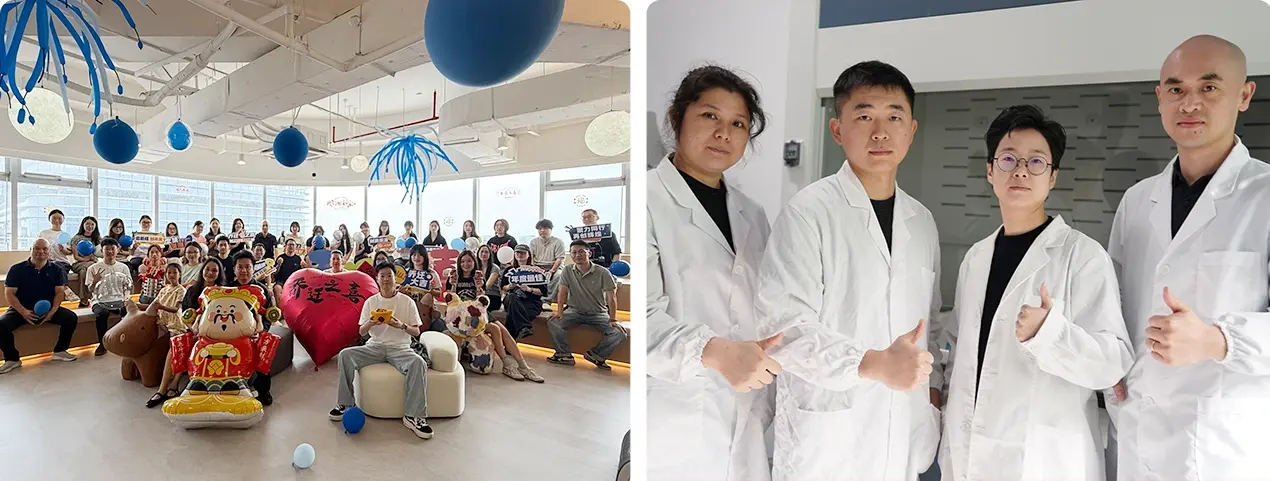
A: Formulation advice comes from our technical team, and so does help with scientific research. Application solutions get worked out by them too. Small samples for product testing are available before you place a bulk order.
Q: Could you combine collagen peptides with probiotics in one formula?
A: Probiotics stay alive thanks to collagen and specific blending methods. The strain you pick plays a part here. So do your shelf-life targets, and both can shape the formula.
Q: Which sensory gains set premium-grade marine collagen apart?
A: Multi-stage filtering removes fishy smells and flavours. The neutral profile blends into delicate flavour systems without reformulation.
Q: In what ways does your product support sustainability and clean labelling?
A: MSC certification is open for wild-caught supplies. Ingredients taken from the sea appeal to shoppers who want a choice beyond cattle raised on land. These products also support ocean environment management.
Contact Us
Do you have more questions about Hydrolyzed Marine Collagen Type 1? Send a note to jiayi@biojiae.com to talk over your specific requirements.