- English
- French
- German
- Portuguese
- Spanish
- Russian
- Japanese
- Korean
- Arabic
- Irish
- Greek
- Turkish
- Italian
- Danish
- Romanian
- Indonesian
- Czech
- Afrikaans
- Swedish
- Polish
- Basque
- Catalan
- Esperanto
- Hindi
- Lao
- Albanian
- Amharic
- Armenian
- Azerbaijani
- Belarusian
- Bengali
- Bosnian
- Bulgarian
- Cebuano
- Chichewa
- Corsican
- Croatian
- Dutch
- Estonian
- Filipino
- Finnish
- Frisian
- Galician
- Georgian
- Gujarati
- Haitian
- Hausa
- Hawaiian
- Hebrew
- Hmong
- Hungarian
- Icelandic
- Igbo
- Javanese
- Kannada
- Kazakh
- Khmer
- Kurdish
- Kyrgyz
- Latin
- Latvian
- Lithuanian
- Luxembou..
- Macedonian
- Malagasy
- Malay
- Malayalam
- Maltese
- Maori
- Marathi
- Mongolian
- Burmese
- Nepali
- Norwegian
- Pashto
- Persian
- Punjabi
- Serbian
- Sesotho
- Sinhala
- Slovak
- Slovenian
- Somali
- Samoan
- Scots Gaelic
- Shona
- Sindhi
- Sundanese
- Swahili
- Tajik
- Tamil
- Telugu
- Thai
- Ukrainian
- Urdu
- Uzbek
- Vietnamese
- Welsh
- Xhosa
- Yiddish
- Yoruba
- Zulu
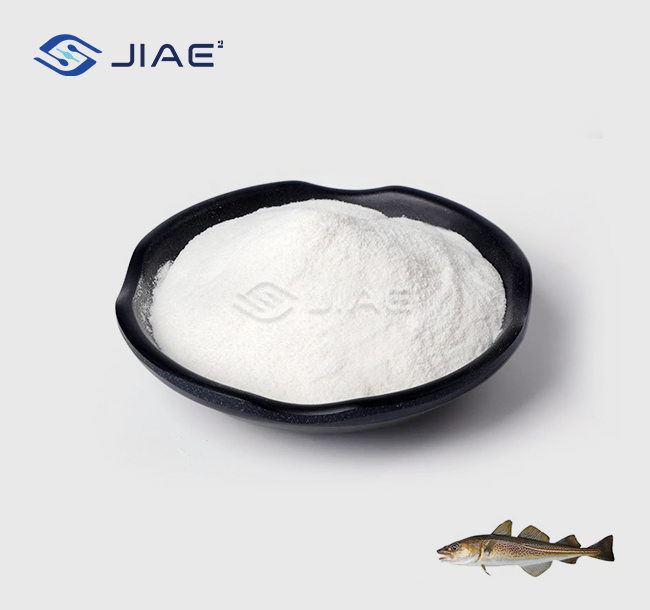
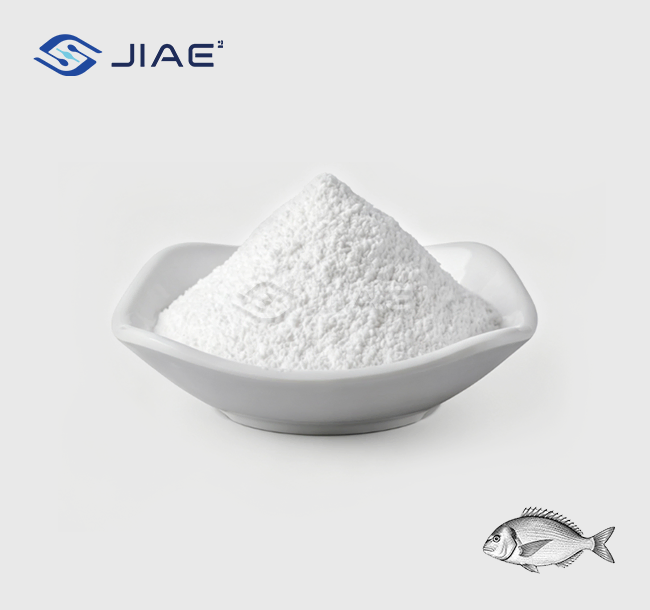
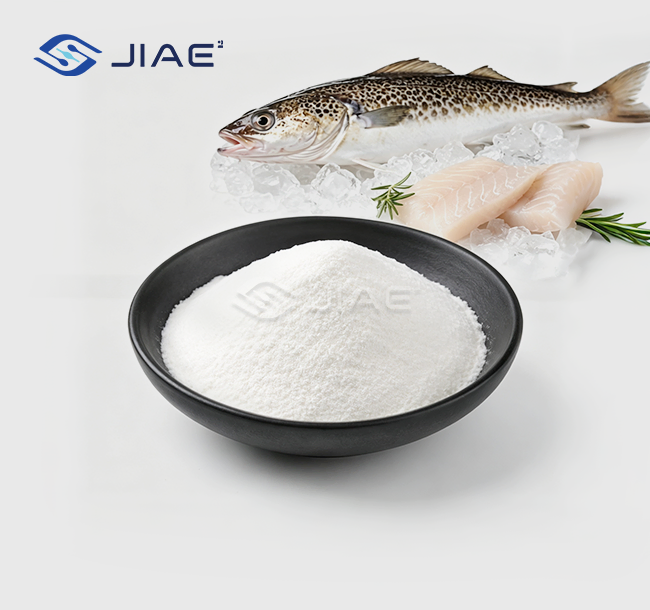
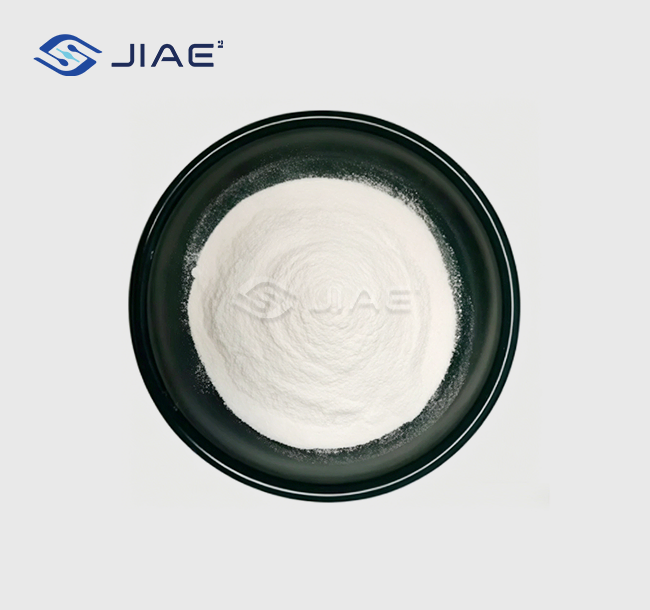
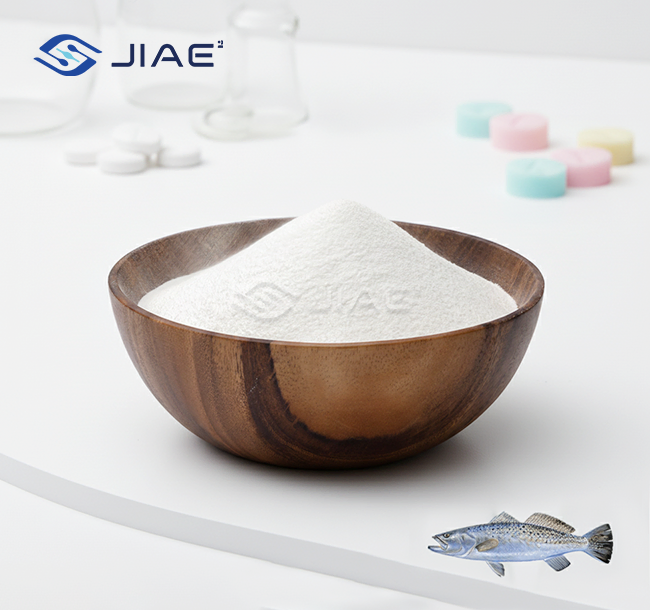
Wild Caught Marine Collagen Peptides
Main Active: Collagen Peptides
Purity Standard: Over 95%
Place of Origin: PRC
Visual Form: Pale yellow to white powder
Dissolution Rate: Instant
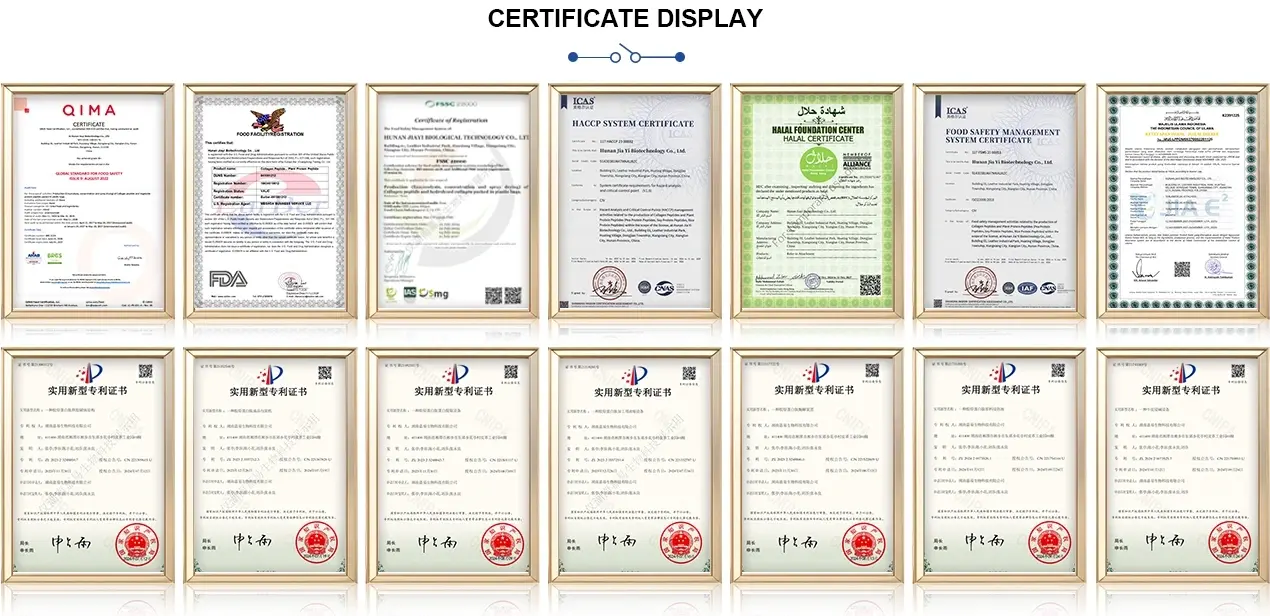
Quality Standards: FDA、 ISO9001、 ISO22000、 HACCP、 BRC、 FSSC22000、HALAL
Trade Incoterms: EXW, FOB, CFR, CIF, DAP, DDP
Pay Terms: Telegraphic Transfer (T/T)
Shipping Options: Air, Sea, Rail
Service Type: OEM & ODM
Availability: Well-Stocked; Secure & Prompt Delivery
Packing: 10 kg and 20 kg
MOQ Requirement: 1 kg
Shelf Life Period: 24 months
CAS Registry No.: 9064-67-9
Premium Wild Caught Marine Collagen Peptides for Functional Nutrition and Beauty Applications – High Purity, Traceable Supply
Jia Yi Bio sells Wild Caught Marine Collagen Peptides, made from fish caught in clean oceans. Enzymatic hydrolysis is used on these peptides. It makes them more than 95% pure protein. For 23 years the business has made collagen. Each year it can turn out 4,000 tons of fish collagen. Their business-grade collagen products hold full certifications from FDA, ISO 22000, HACCP, BRC, FSSC 22000, and HALAL. Several production sites support manufacturing. Foreign warehouses in California and Thailand help too. Orders can go out in 10 days. B2B customers around the world can pick from several call-off delivery models.
Strong Bioavailability Through Controlled Molecular Weight
How well your product works changes how well it soaks in. Our Jia Yi Bio products have just the right molecular weight range. That range runs from 800 to 2,000 Daltons. Enzyme control is precise, so the medicine absorbs fast in the intestines. From there it goes straight to the connective tissues.
After they enter the blood, peptides under 2,000 Daltons travel 1.5 times quicker than proteins that are still whole. Glycine shows up in large amounts. Proline does too, and so does Hydroxyproline. The body uses these amino acids to build collagen. Collagen keeps bones strong and skin flexible.
Technical Specifications and Quality Parameters
| Testing Content | Test Method | Testing Value | Single Conclusion | Testing Method | ||
| Sensory Requirements | White or light yellow, with the taste and smell of the product, no odor, powdery or detailed, no clumps, no foreign bodies visible in normal vision. | Conformed | Qualified | GB/T 31645 | ||
| Moisture/(g/100g) | ≤7.0 | 5.25 | Qualified | GB 5009.3 | ||
| Ash/(g/100g) | ≤7.0 | 0.4 | Qualified | GB 5009.4 | ||
| Total Nitrogen/(g/100g) | ≥15.0 | 16.9 | Qualified | GB 5009.5 | ||
| Protein(dry base,N*5.79,g/100g) | ≥90.0 | 97.9 | Qualified | GB 5009.5 | ||
| pH | / | 6.51 | Qualified | / | ||
| Stacking Density/(g/ml) | / | 0.46 | Qualified | / | ||
| Peroxides/(mg/kg) | ≤10.0 | 0 | Qualified | QB 2732 | ||
| Sulfur Dioxide/(mg/kg) | ≤50 | 0.64 | Qualified | QB 2732 | ||
| Arsenic/(mg/kg) | ≤1.0 | Not Detected | Qualified | GB 5009.11 | ||
| Cadmium/(mg/kg) | ≤0.1 | Not Detected | Qualified | GB 5009.15 | ||
| Chromium/(mg/kg) | ≤2.0 | 0.3 | Qualified | GB 5009.123 | ||
| Lead/(mg/kg) | ≤0.8 | Not Detected | Qualified | GB 5009.12 | ||
| Total Mercury/(mg/kg) | ≤0.1 | Not Detected | Qualified | GB 5009.17 | ||
| Total Bacteria/ CFU/g | n=5 c=2 m=10³ M=10⁴ |
130 | Qualified | GB 4789.2 | ||
| 20 | Qualified | |||||
| 65 | Qualified | |||||
| 40 | Qualified | |||||
| <10 | Qualified | |||||
| Coliforms/ CFU/g | n=5 c=2 m=10 M=10² |
<10 | Qualified | GB 4789.3 | ||
| <10 | Qualified | |||||
| <10 | Qualified | |||||
| <10 | Qualified | |||||
| <10 | Qualified | |||||
| E.coli / CFU/g | ≤10.0 | Not Detected | Qualified | GB 4789.38 | ||
| Mould/ CFU/g | ≤50.0 | <10 | Qualified | GB 4789.15 | ||
| Salmonella species / CFU/g | n=5 c=0 M=0 |
Not Detected | Qualified | GB 4789.4 | ||
| Not Detected | Qualified | |||||
| Not Detected | Qualified | |||||
| Not Detected | Qualified | |||||
| Not Detected | Qualified | |||||
| Staphylococcus aureus/ CFU/g | n=5 c=0 M=10² |
Not Detected | Qualified | GB 4789.10 | ||
ICP-MS screens every batch for heavy metals. Molecular weight is confirmed by HPLC. We also analyse hydroxyproline content. Those checks help guard against adulteration. Microbiological screening covers E. coli and Salmonella. Staphylococcus aureus gets tested too. The material then meets USP and EP safety thresholds. Clean-Label Sourcing from Uncontaminated Ocean Habitats
Wild fish holds clear advantages over farmed fish. Deep-sea cod is one marine source, with pollock and haddock as the others. Antibiotics are absent from them. So are synthetic dyes and growth hormones, the kind aquaculture systems usually rely on.
This way of getting collagen gets rid of the BSE risks that come with land-based collagen and makes the nutritional balance better. Marine Stewardship Council (MSC) certification choices back up sustainability claims that consumers and retailers are asking for more and more.
Application Versatility Across Formulation Types
Their distinct technical properties make product creation more flexible. Wild Caught Marine Collagen Peptides do not break down when heated to 190°C. You can therefore use them in baked goods, protein bars, and hot drinks. Their shape stays unchanged.
A neutral taste comes from advanced charcoal filtration and ion exchange. Fishy aftertaste is no longer a concern. Liquid vitamins are a good fit. So are ready-to-drink collagen shots. Clear beauty drinks also work, because the liquid stays clear. Low viscosity helps production run smoothly. Gummy making is one use. Tablet compression is another. The same property helps when you encase them.
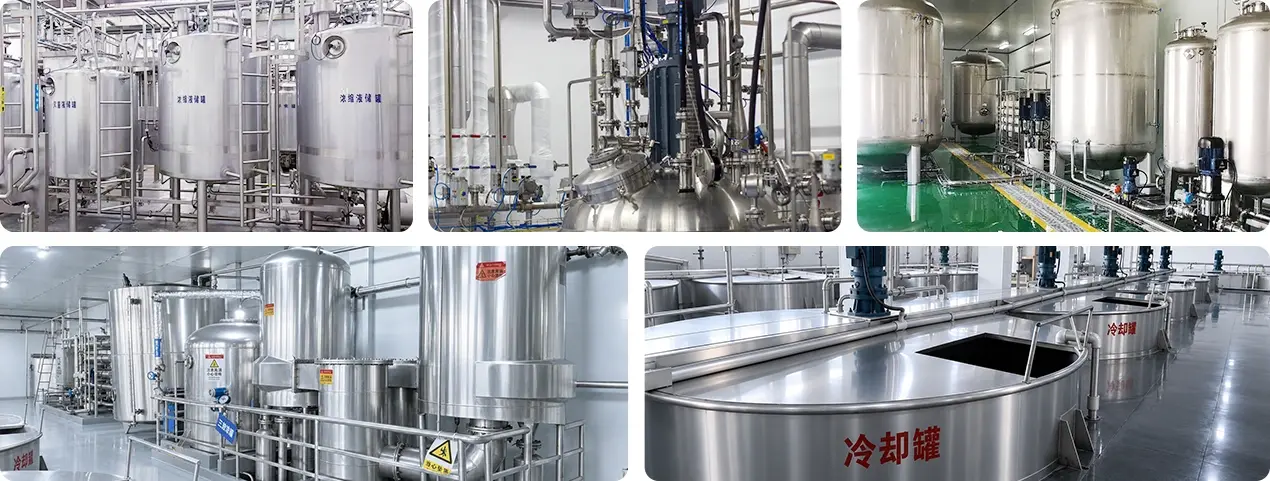
Customizable Production for Targeted Market Positioning
Jia Yi Bio lets you adjust specs to match your functional role. Some bioavailability claims need a different molecular weight, and that can be changed. Bulk density and solubility vary by delivery format. Instant powders are one format. Encapsulated supplements are another. Functional food ingredients are a third.
Food-grade aluminium foil bags are one packaging choice. Vacuum-sealed pouches are another. Export-standard corrugated cartons with custom branding are a third. Several options like these let you package goods your way. Multi-language labelling helps with global distribution. Pack sizes go from 1 kg for samples to 20 kg for large orders. For testing, the minimum order quantity (MOQ) is as low as 1 kg.
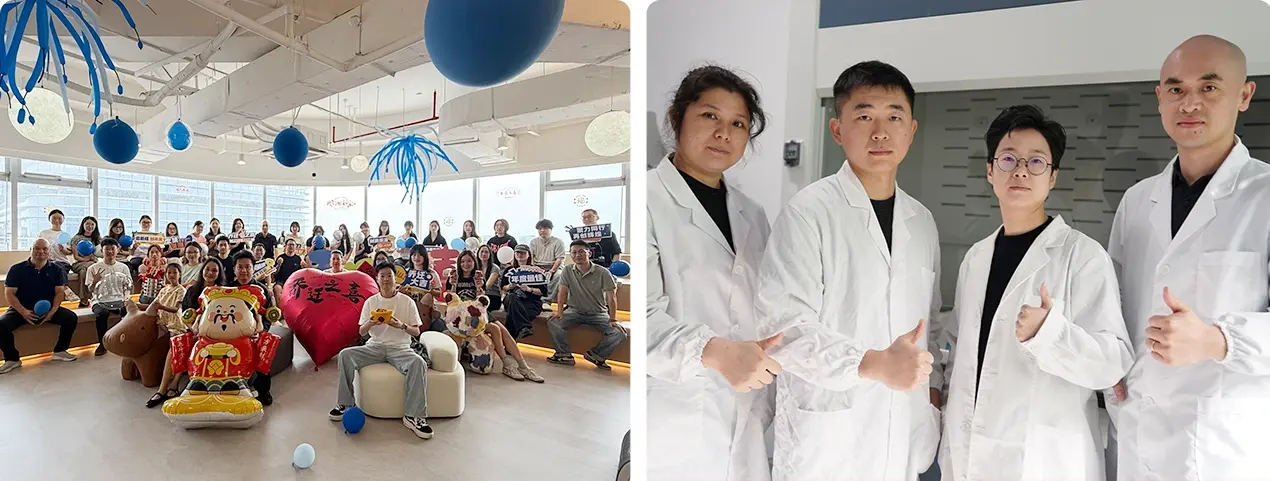
Full Supply Chain Infrastructure
Buying from Jia Yi Bio carries less risk, since the supply network works as one system. Four production bases in China keep goods moving without gaps. They also let production shift when demand changes. Overseas stores in Chino, California, and Thailand hold stock nearer to you. Local stock can be moved from there. Refilling is quick. Single orders ship straight to the end customer.
Customers in North America benefit from inventory held in California. Shipping is faster, and freight costs go down. For orders that fit the profile, turnaround falls to 10 days. Long-term partners who meet the requirements can get payment terms of 30 to 60 days. Payment can be made by T/T or L/C.
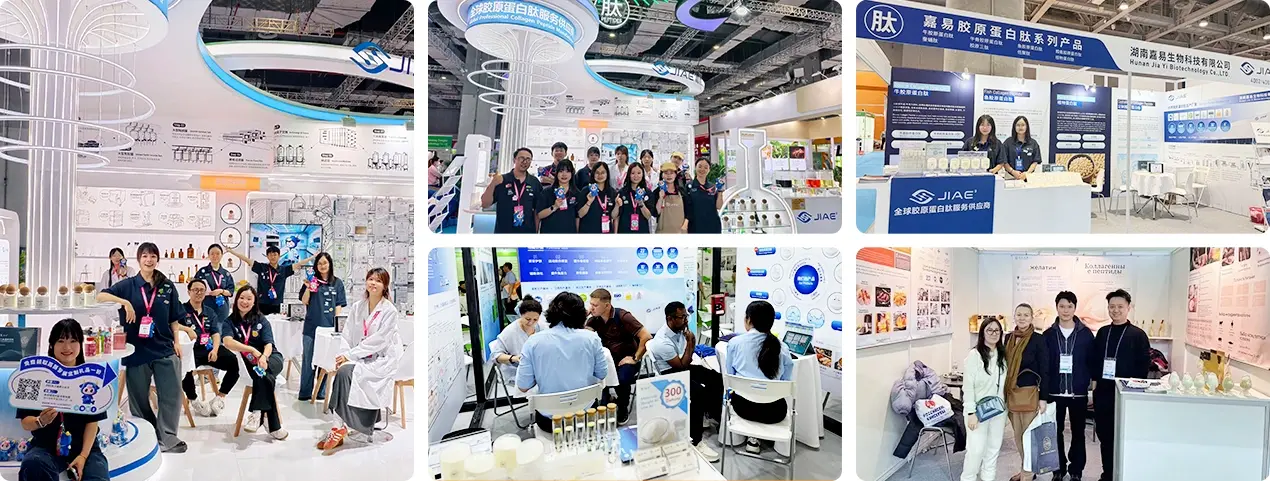
Regulatory Support and Documentation for Wild Caught Marine Collagen Peptides
Technical paperwork that is full and correct gets a product to market faster. Material Safety Data Sheets (MSDS) ship with every batch. Certificates of Analysis (COA) are in the same pack. So are third-party test results. The company gives usage advice too. Suggested doses are 5–10g daily. It explains how to dissolve the products. Ingredient compatibility matrices are included in that advice.
Third-party certification is led by the customer. That work counts as part of the support. Filings are requested by regulators as well. People can test Wild Caught Marine Collagen Peptides with small samples before they buy a full amount. Everything is tracked in records kept for three years. Those records show where raw materials came from. They list which batches were made. Quality data sits in them too. A quality problem's root cause then takes very little time to find.
FAQ
Q: What puts wild-caught marine collagen ahead of farmed marine collagen?
A: Wild-caught fish carry neither antibiotics nor synthetic dyes. Fish raised in aquaculture do. So the nutritional profile is cleaner. That fits clean-label trends.
Q: Does a fishy aftertaste remain once the products are used?
A: Charcoal filtration and ion exchange are used on top grades. This pulls out trimethylamine. What remains has a neutral taste. It works well for flavoring.
Q: Are the results tied to molecular weight?
A: Yes. Peptides under 3,000 Daltons enter the bloodstream more easily than larger proteins do. Clinical trials confirm this.
Q: How should the product be stored so it keeps for as long as possible?
A: Store it somewhere cool and dry (RH <60%). That keeps it from clumping. Given the right conditions, you can usually count on 24 months of shelf life.
Q: Can it take the heat in baking and other processes that run at high temperatures?
A: Yes, it can. Heat does not break the peptide bonds, which stay stable up to 300°C. Functional bakery goods are therefore a good fit for it.
Q: What formula would you suggest for skin health?
A: Fish collagen combined with Vitamin C and Zinc is highly effective for collagen synthesis support.
Q: What makes wild-caught sourcing worth it?
A: The material is cleaner. Contaminants from farm-raised fish are not there. That helps you sell it as a premium product and stay inside the rules.
Q: Can collagen be used in protein bars?
A: Yes. It improves texture and improve the protein profile of bars without affecting taste.
Q: Do you provide scientific white papers?
A: Yes. Internal research data on absorption rates and application studies are available upon request.
Q: Can you take collagen and probiotics at the same time?
A: Yes. A special encapsulation process protects the probiotics. They stay stable while in storage and while being processed.
Contact Us
Do you have more questions about Wild Caught Marine Collagen Peptides? Contact our technical team at jiayi@biojiae.com to discuss your formulation requirements, or arrange sample shipments for evaluation.