- English
- French
- German
- Portuguese
- Spanish
- Russian
- Japanese
- Korean
- Arabic
- Irish
- Greek
- Turkish
- Italian
- Danish
- Romanian
- Indonesian
- Czech
- Afrikaans
- Swedish
- Polish
- Basque
- Catalan
- Esperanto
- Hindi
- Lao
- Albanian
- Amharic
- Armenian
- Azerbaijani
- Belarusian
- Bengali
- Bosnian
- Bulgarian
- Cebuano
- Chichewa
- Corsican
- Croatian
- Dutch
- Estonian
- Filipino
- Finnish
- Frisian
- Galician
- Georgian
- Gujarati
- Haitian
- Hausa
- Hawaiian
- Hebrew
- Hmong
- Hungarian
- Icelandic
- Igbo
- Javanese
- Kannada
- Kazakh
- Khmer
- Kurdish
- Kyrgyz
- Latin
- Latvian
- Lithuanian
- Luxembou..
- Macedonian
- Malagasy
- Malay
- Malayalam
- Maltese
- Maori
- Marathi
- Mongolian
- Burmese
- Nepali
- Norwegian
- Pashto
- Persian
- Punjabi
- Serbian
- Sesotho
- Sinhala
- Slovak
- Slovenian
- Somali
- Samoan
- Scots Gaelic
- Shona
- Sindhi
- Sundanese
- Swahili
- Tajik
- Tamil
- Telugu
- Thai
- Ukrainian
- Urdu
- Uzbek
- Vietnamese
- Welsh
- Xhosa
- Yiddish
- Yoruba
- Zulu
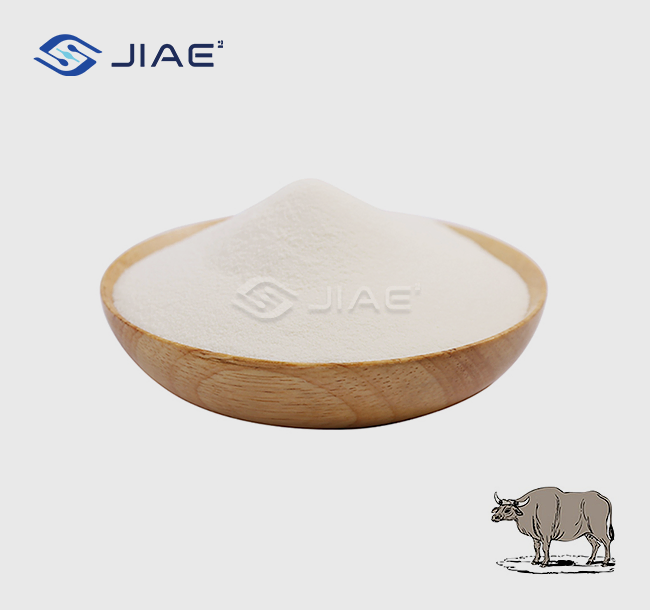
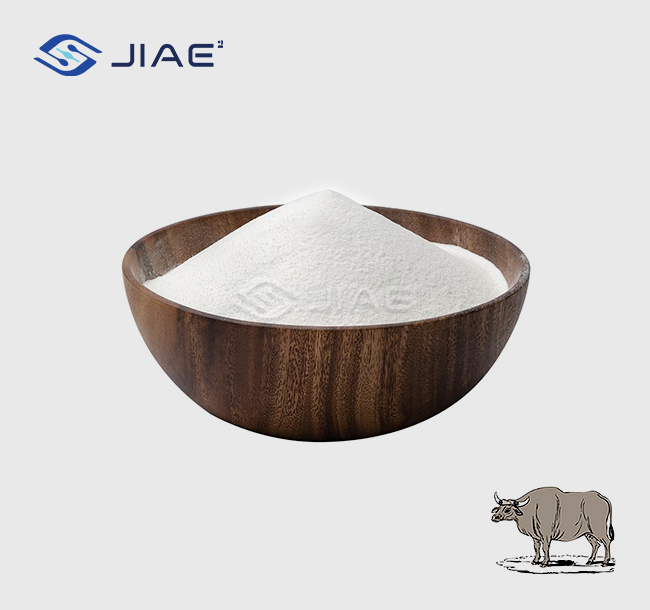
Collagen Peptides Type 2
Main Active: Active Collagen
Purity Rate: Above 95%
Made in: China
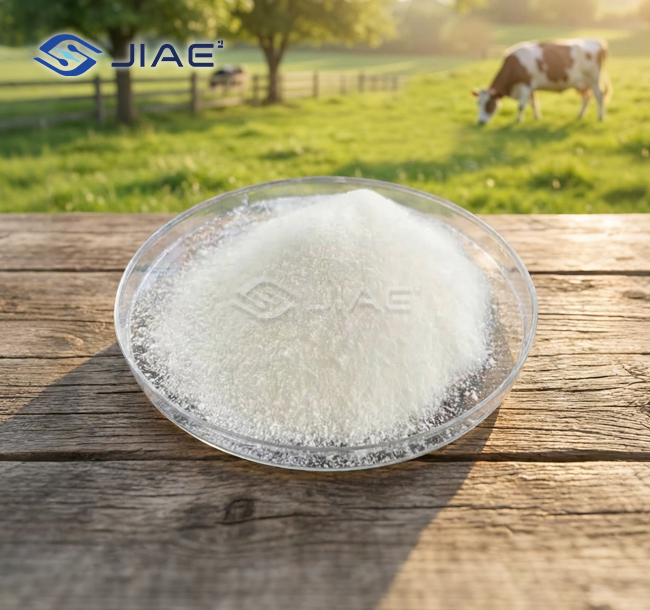
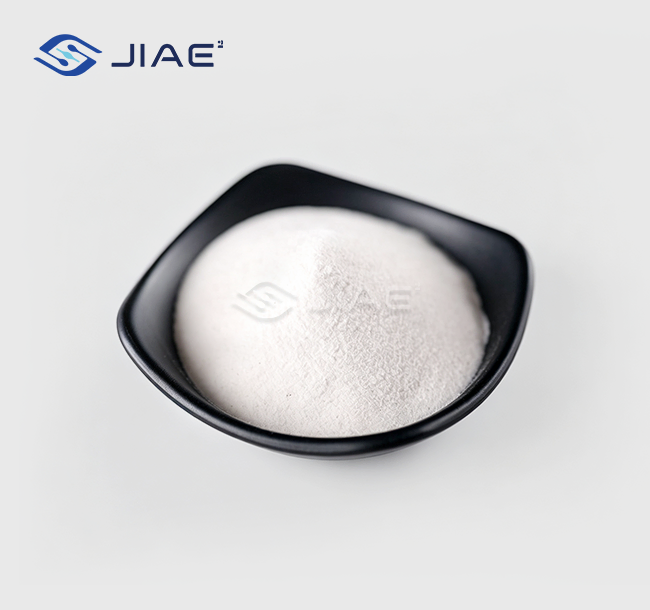
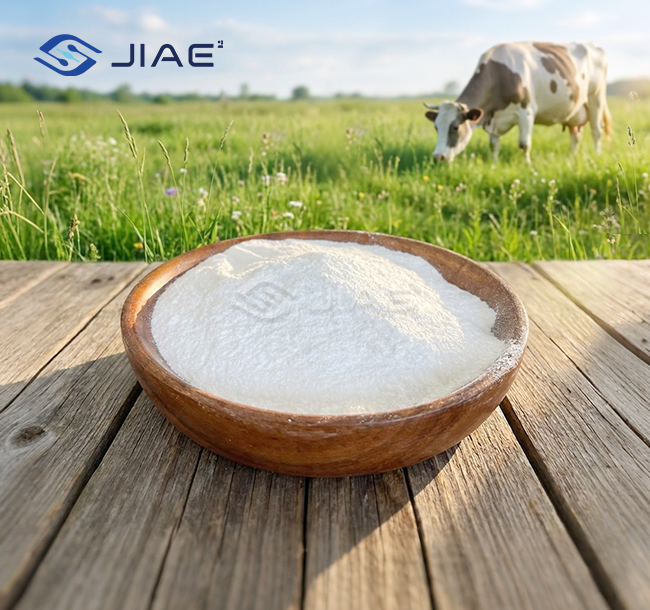
Form: Pale yellow to white powder
Soluble: Rapidly soluble
Quality Standards: FDA、 ISO9001、 ISO22000、 HACCP、 BRC、 FSSC22000、HALAL
Shipping Terms: EXW, FOB, CFR, CIF, DAP, DDP
Payment Terms: Wire Transfer (T/T)
Shipping Options: Air, Sea, Rail
Services: OEM & ODM
Stock: Ample Supply; Safe and Prompt Delivery
Packing: 10 kg / 20 kg
Minimum Order Quantity (MOQ): 1 kilogram
Best Before: 2 years
CAS Registry Number: 9064-67-9
Premium Collagen Peptides Type 2 for Joint Health and Sports Nutrition Applications
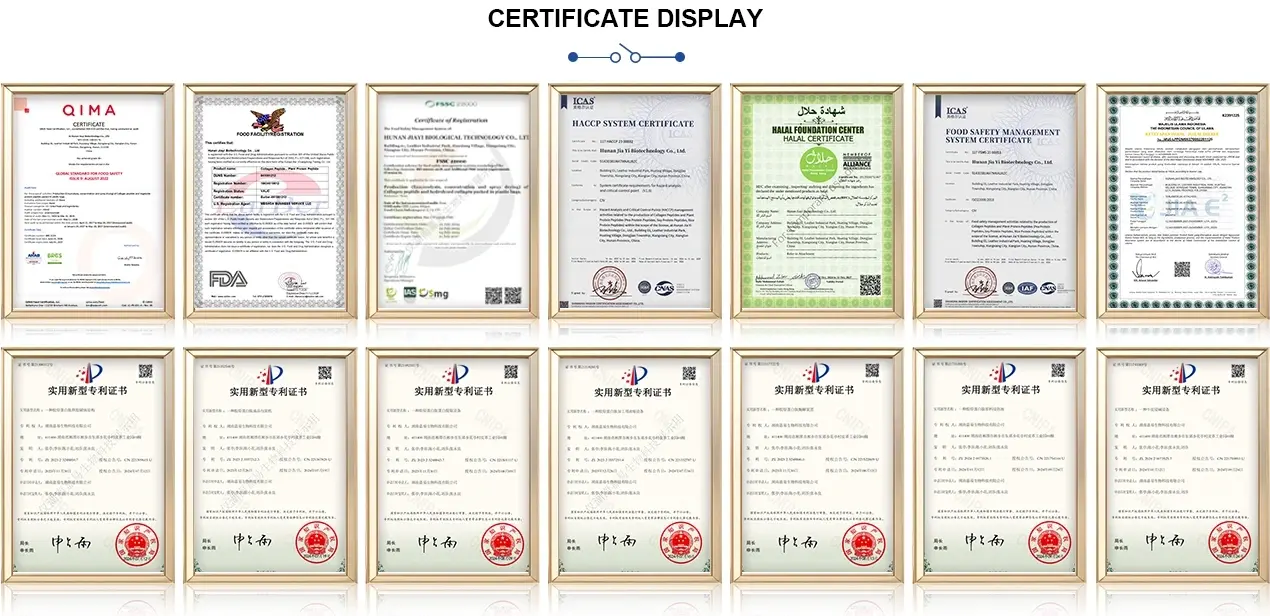
Enzymatic hydrolysis is how Jia Yi Bio converts bovine bone into food-grade Collagen Peptides Type 2. Bioactive peptides have been the company's focus for 23 years. FDA, ISO 22000, HACCP, BRC plus HALAL certification are all held. Output runs to 10,000 tons of bovine collagen every year. Quality stays the same from batch to batch. Purity goes past 95%. The powder dissolves fast. Taste is neutral. Joint care supplements put it to work. So do sports recovery formulas and functional drinks. Qualified orders ship within 10 days. Several production bases handle that, and warehouses in California and Thailand do too.
What Makes type Different from Other Types?
Cartilage and connective tissue get most of their protein from this product. Skin elasticity and bone density both depend on Type 1 collagen. Type 2 does a different job. Rebuilding joint cartilage is its task. That cartilage also stays flexible thanks to it.
Enzymatic hydrolysis breaks down long-chain collagen molecules. What comes out are peptides weighing 800 to 2,000 Daltons. The gut absorbs natural collagen less easily. Molecular optimisation solves that problem. Uptake in the intestine rises a great deal.
A bioactive matrix sits inside type 2. Chondroitin sulphate, glucosamine, and hyaluronic acid all feed into that mix. Together these compounds keep cartilage and joint lubrication working. For musculoskeletal use, the bone-derived source holds up well. Its makeup comes close to human bone tissue.
Technical Specifications
| Testing Content | Test Method | Testing Value | Single Conclusion | Testing Method | ||
| Sensory Requirements | White or light yellow, with the taste and smell of the product, no odor, powdery or detailed, no clumps, no foreign bodies visible in normal vision. | Conformed | Qualified | GB/T 31645 | ||
| Moisture/(g/100g) | ≤7.0 | 5.45 | Qualified | GB 5009.3 | ||
| Ash/(g/100g) | ≤7.0 | 1.9 | Qualified | GB 5009.4 | ||
| Total Nitrogen/(g/100g) | ≥15.0 | 17.0 | Qualified | GB 5009.5 | ||
| Protein(dry base,N*5.79,g/100g) | ≥90.0 | 98.4 | Qualified | GB 5009.5 | ||
| pH | / | 5.94 | Qualified | / | ||
| Stacking Density/(g/ml) | / | 0.5 | Qualified | / | ||
| Peroxides/(mg/kg) | ≤10.0 | 0 | Qualified | QB 2732 | ||
| Sulfur Dioxide/(mg/kg) | ≤50 | 0.64 | Qualified | QB 2732 | ||
| Arsenic/(mg/kg) | ≤1.0 | Not Detected | Qualified | GB 5009.11 | ||
| Cadmium/(mg/kg) | ≤0.1 | Not Detected | Qualified | GB 5009.15 | ||
| Chromium/(mg/kg) | ≤2.0 | 0.33 | Qualified | GB 5009.123 | ||
| Lead/(mg/kg) | ≤0.8 | Not Detected | Qualified | GB 5009.12 | ||
| Total Mercury/(mg/kg) | ≤0.1 | Not Detected | Qualified | GB 5009.17 | ||
| Total Bacteria/ CFU/g | n=5 c=2 m=10³ M=10⁴ |
110 | Qualified | GB 4789.2 | ||
| 100 | Qualified | |||||
| 15 | Qualified | |||||
| 60 | Qualified | |||||
| <10 | Qualified | |||||
| Coliforms/ CFU/g | n=5 c=2 m=10 M=10² |
<10 | Qualified | GB 4789.3 | ||
| <10 | Qualified | |||||
| <10 | Qualified | |||||
| <10 | Qualified | |||||
| <10 | Qualified | |||||
| E.coli / CFU/g | ≤10.0 | Not Detected | Qualified | GB 4789.38 | ||
| Mould/ CFU/g | ≤50.0 | <10 | Qualified | GB 4789.15 | ||
| Salmonella species / CFU/g | n=5 c=0 M=0 |
Not Detected | Qualified | GB 4789.4 | ||
| Not Detected | Qualified | |||||
| Not Detected | Qualified | |||||
| Not Detected | Qualified | |||||
| Not Detected | Qualified | |||||
| Staphylococcus aureus/ CFU/g | n=5 c=0 M=10² |
Not Detected | Qualified | GB 4789.10 | ||
| Not Detected | Qualified | |||||
| Not Detected | Qualified | |||||
| Not Detected | Qualified | |||||
| Not Detected | Qualified | |||||
Key Applications in Joint Health and Sports Nutrition
How it gets applied depends on what the formulation needs. Joint health supplements are the main market for type 2 collagen. There, a dose of 5-10 grammes a day improves mobility and comfort.
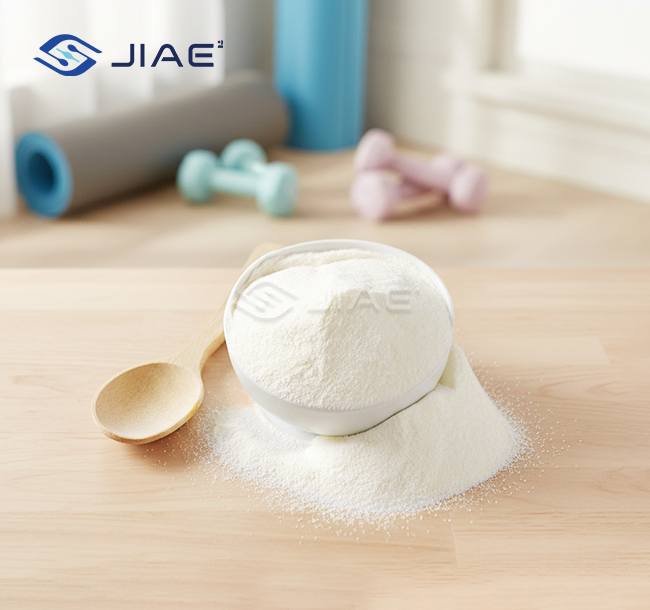
Sports nutrition companies put this substance in their post-workout recovery mixes. High levels of hydroxyproline and glycine give support to the extracellular matrix of tendons and ligaments. Athletes on high impact training programs benefit from taking it regularly.
For makers of functional beverages, two things matter: a neutral flavour and easy solubility. The ingredient stays in solution. No other flavours get affected, so ready-to-drink products stay clear. A stable product leaves room to work. Use it to build protein drinks. Coffee creamers fit too, and so do recovery shots.
Makers of protein bars use collagen peptides for texture and a good amino acid profile. These peptides go straight into the bar matrix. Mouthfeel does not change. Neither does structure.
Manufacturing Excellence and Quality Assurance
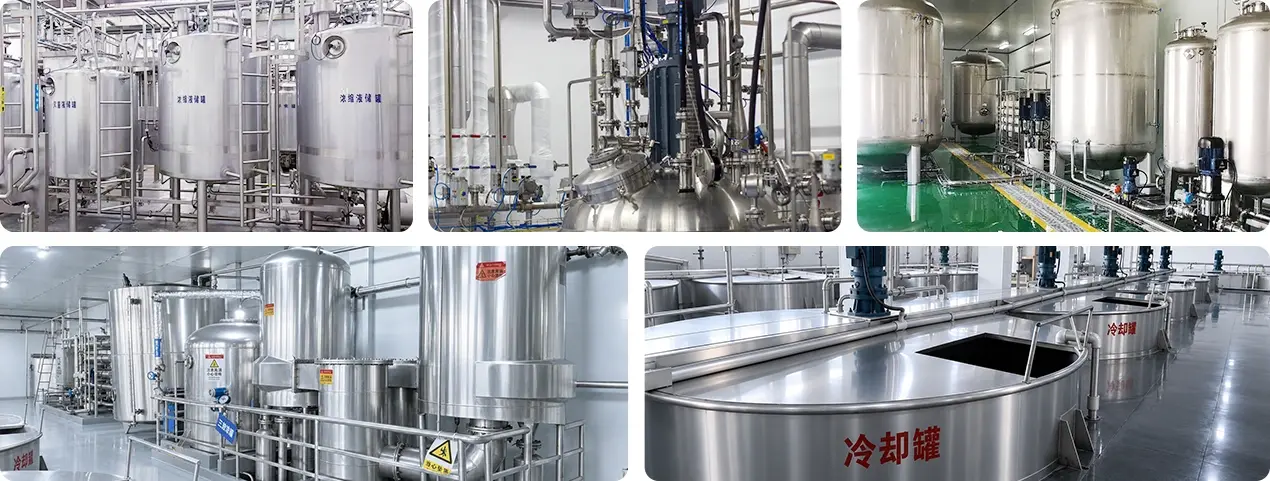
Two rounds of inspection cover every production batch. HPLC shows the molecular weight distribution does not drift. From one batch to the next, absorption rates hold steady.
Heavy metal testing follows worldwide norms. Mercury stays below 0.1 ppm. Arsenic is held under 1.0 ppm. Lead sits below 0.8 ppm. E. coli and Salmonella are cleared by microbiological screening. Staphylococcus aureus gets checked as well. Total Plate Count stays under 1,000 cfu/g.
Amino acid profiling confirms what Type 2 collagen is made of. The bovine origin is confirmed by the same test. Clarity gets checked too. Transmittance and turbidity tests show how the ingredient behaves in premium beverages.
Paper trails follow every batch, from the raw material stage through to packaging. Records are kept for three years. Pinpointing a root cause then takes very little time.
Flexible Customization for Your Brand
Each application needs its own settings. Molecular weight of Collagen Peptides Type 2 can be tuned to suit. Bulk density and solubility can be adjusted too. Tablets and powders get their own formulation changes. Oral liquids, gummies, and topicals follow the same rule.
Market needs are covered by Kosher and Halal certifications. Products that are plant-based reach EU and North American markets with vegan declarations.
Inner packaging takes other forms as well. Food-grade aluminium foil bags are one. PE liners are another. Vacuum packing is a further option. Multilingual labels make global distribution easier. Custom logos help there too. Outer packing ships as export corrugated cartons or in palletized bulk form.
You can test the product first with a small trial batch, before any mass production run. Development moves faster when an ODM handles the prototyping.
Collagen Peptides Type 2 Supply Chain Advantages and Global Logistics
Warehouses in California and Thailand cut delivery times and ocean freight costs. Stock transfer is open to North American customers. Container devanning and dropship from Chino, California are options as well.
A flexible production schedule handles demand swings. Urgent requests get handled too. Call-off models send goods in stages, so shipments line up with inventory management.
Logistics flexibility comes from FOB terms. CIF and DDP give you the same room to move. Customs and tariffs get handled under DDP. That makes international delivery simpler.
L/C and T/T both work for us. Repeat buyers with a solid record can pay in 30 to 60 days.
Packaging Options
Each order goes out in a five-layer corrugated carton built for export. Pick from two sizes: 10 kg or 20 kg. The quantity is your call. Start with a 1 kg sample if you like, then step up to a 20 kg bulk container later.
The inside of the box is lined with food-grade aluminium foil. That lining protects the product during storage and shipping. Outside, you can have your brand printed on the box, or leave it plain. White-label sellers get what they need here. Branded distributors do too.
E-commerce gets simpler when the Collagen Peptides Type 2 packaging is ready for Amazon FBA. Box labels can be printed in English, Arabic, Russian, Japanese, Indonesian, and Spanish. More markets open up to you that way.
FAQ
Q: Which collagen is now popular?
A: Bovine and marine collagen in granulated form sells well with consumers. The reason is simple. It dissolves easily and the taste works.
Q: Is there a formula you can suggest for joint health?
A: Type 2 collagen helps. So do MSM, turmeric extract, and boswellia serrata. You'll find them in joint support formulas that work.
Q: Do you provide marketing materials?
A: Marketing depends on three things. Scientific studies confirm it. The same is true for technical white papers and product photos.
Q: What is the upside to collagen made from bone?
A: Its structure is close to human bone tissue. That makes it easier for the body to accept it. It also helps the material reach skeletal tissues in a targeted way.
Q: Could you use collagen in protein bars?
A: It adds protein. Texture and structure come from it too. The taste does not change.
Q: Which dose do you recommend for the supplements?
A: Clinical trials point to 5-10 grammes a day for joint health. You may see effects in 8-12 weeks.
Q: Can you get collagen as a liquid?
A: Clear drinks stay clear. Shots and waters hold up fine. So do ready-to-drink beverages, provided the collagen peptides show high transmittance.
Q: What comes out of enzymatic hydrolysis?
A: Guide the molecular weight profiles, and you get the bioavailability and functional efficacy you want.
Q: Can collagen and probiotics be blended together?
A: Yes. Powder and capsule forms of collagen peptides go through special processing. Live probiotics survive because of that step.
Q: Which formulation issues are common?
A: So what matters most is how well it dissolves, how the smell is kept in check, and whether each batch comes out the same. Our production process deals with all of these.
Contact Us
Certificates of analysis, material safety data sheets, Email jiayi@biojiae.com to ask for them. Our pharmaceutical-grade Collagen Peptides Type 2 comes from 23 years of bioactive peptide manufacturing.